Crop Management Practices: Gapping, Thinning, Weeding and Earthing-Up Explained
Learn about crop management practices carried out after planting, including gapping,
thinning, weeding and earthing-up, and how these practices improve crop growth,
health and final yield.
Those tiny 💡 bulbs are not just sitting there looking cute 😏
Tap them… they’re hiding smart facts 🧠✨
2. Selected Crop Management Practices
Crop management practices are activities carried out after planting to ensure crops grow healthy and produce high yields.
These practices help crops grow properly, use nutrients well, resist pests and diseases, and produce better quality harvests.
💡
Did you know?Even when seeds germinate well, poor crop management after planting can still reduce yield and crop quality.
👉 In simple terms, crop management practices help farmers take care of crops after planting.
Importance of Management Practices
These practices help to:
- Maintain the correct plant population in the field
- Reduce competition for nutrients, water and sunlight
- Improve crop growth and development
- Protect crops from pests, diseases and environmental stress
- Increase the quantity and quality of harvest
👉 Proper crop management directly affects the quantity and quality of harvest.
1. Gapping
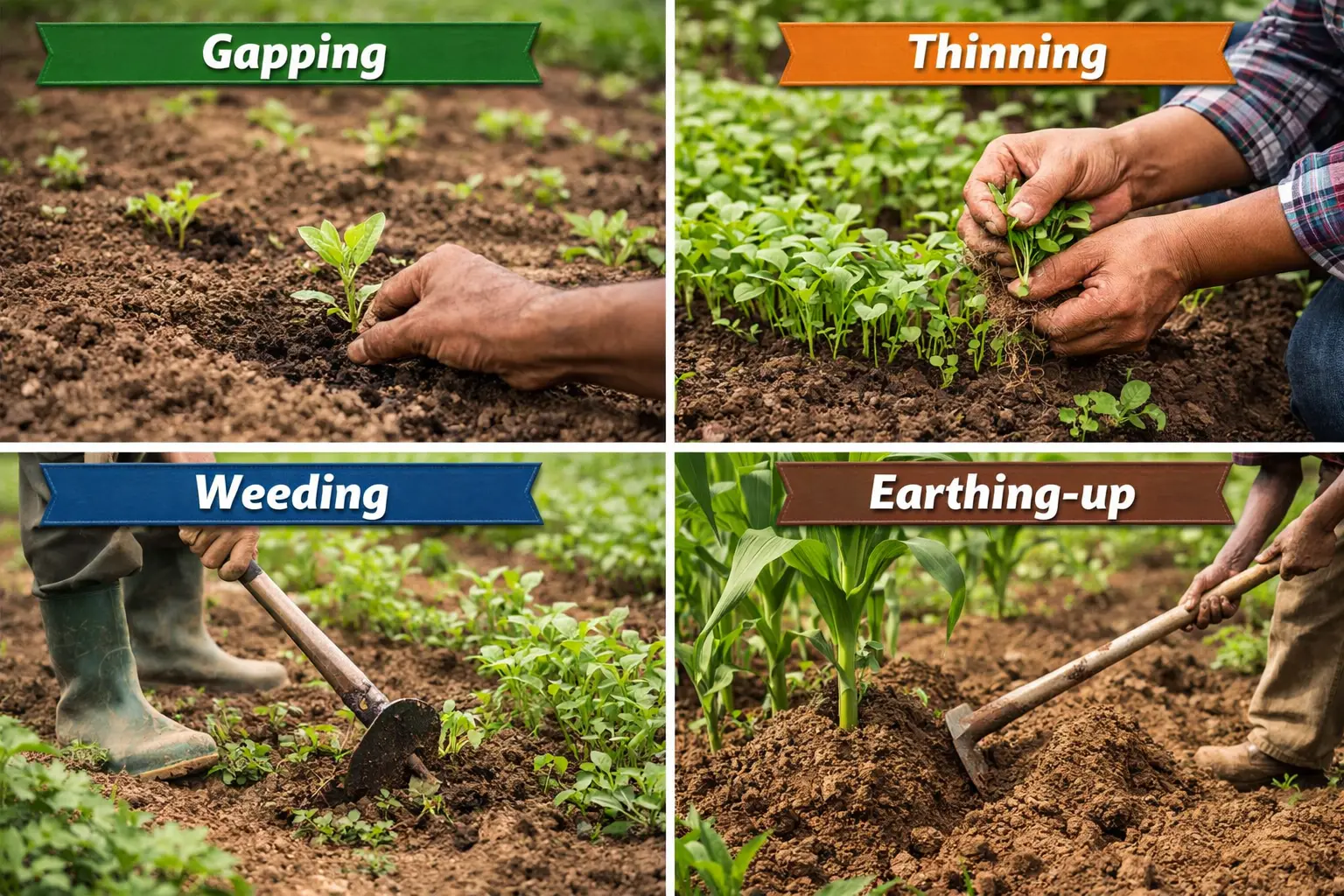
Gapping is the practice of planting seeds or seedlings in spaces where germination failed or where plants died after planting.
It is usually done shortly after germination to maintain uniform plant population.
Reasons for Gaps in a Field
- Poor seed quality
- Planting too deep or too shallow
- Pest or disease attack
- Heavy rainfall washing away seeds
- Drought conditions
👉 Gaps reduce the number of plants in the field and can lower final yield.
Importance of Gapping
- Ensures full and uniform plant population.
- Maximizes use of available garden space.
- Increases overall crop yield.
- Replaces plants damaged by pests, diseases, or bad weather.
- Promotes even growth and maturity.
👉 Gapping helps crops grow evenly across the field.
💡
Did you know?Early gapping is better because new plants get more time to catch up with the rest of the crop.
Practising Gapping
- Inspect the field to identify empty spaces.
- Prepare the planting site properly.
- Make suitable tilth.
- Prepare holes or lines similar to the original planting.
- Add manure where necessary.
- Plant fresh seeds or seedlings in the gaps.
- Water if soil is dry.
- Check again after a few days to confirm successful establishment.
2. Thinning
Thinning is the removal of excess plants in areas where too many seeds germinated, causing overcrowding.
It is commonly done after germination when seedlings are strong enough to identify healthy plants.
Why Thinning is Necessary
When plants are overcrowded:
- They compete for sunlight.
- They compete for nutrients and water.
- They grow weak and spindly.
- They may produce low yields.
👉 Overcrowding makes crops weak because they fight for the same resources.
Importance of Thinning
- Ensures proper spacing between plants.
- Improves sunlight penetration.
- Enhances access to water and nutrients.
- Promotes strong root development.
- Prevents weak and stunted plants.
- Reduces spread of diseases.
👉 Thinning allows the healthiest plants to grow better.
💡
Did you know?When plants are too close together, air movement is reduced, and this can increase the spread of diseases.
Practicing Thinning
- Wear protective equipment if necessary.
- Water soil if dry to make removal easier.
- Identify weak, unhealthy, or excess plants.
- Carefully remove unwanted seedlings.
- Leave strong and healthy plants properly spaced.
- Avoid disturbing roots of remaining plants.
3. Weeding
Weeding is the removal of unwanted plants (weeds) that grow alongside crops.
Weeds compete with crops and can significantly reduce yields.
Effects of Weeds on Crops
- Compete for nutrients.
- Compete for water.
- Block sunlight.
- Harbor pests and diseases.
- Reduce crop quality and yield.
👉 Weeds reduce both crop growth and productivity.
Importance of Weeding
- Reduces competition for nutrients and water.
- Improves crop health and vigor.
- Prevents spread of pests and diseases.
- Enhances proper crop growth.
- Improves field appearance and management.
👉 Regular weeding keeps the field clean and productive.
💡
Did you know?Removing weeds before they flower helps prevent them from producing new seeds and spreading faster.
Practicing Weeding
- Wear protective gear.
- Remove weeds manually using a hoe or by hand.
- Avoid damaging crop roots.
- Uproot weeds before they flower and produce seeds.
- Compost weeds or leave them to dry and rot as organic matter.
- Weed regularly to prevent heavy infestation.
4. Earthing-up
Earthing-up is the practice of gathering soil around the base of a growing plant.
It is commonly done for crops like potatoes and maize.
Importance of Earthing-up
- Supports plant stability and prevents lodging (falling over).
- Stimulates root development.
- Encourages tuber formation in crops like potatoes.
- Retains moisture around the root zone.
- Covers exposed roots and prevents damage.
👉 Earthing-up helps plants stay firm, healthy and productive.
💡
Did you know?Earthing-up can help prevent plants from falling over during strong winds or heavy rain.
Practising Earthing-up
- Use a hoe or jembe to loosen nearby soil.
- Carefully gather soil around the base of the plant.
- Avoid exposing or cutting roots.
- Ensure soil is firm but not compacted.
- Repeat when necessary as plants grow.
2.3 General Safety Measures During Crop Management
During crop management, safety is important to prevent injuries and health problems while working in the field.
- Wear protective clothing when necessary.
- Use appropriate tools correctly.
- Avoid working in extremely hot weather for long hours.
- Wash hands after fieldwork.
👉 Safety measures protect the farmer while caring for crops.
💡
Did you know?Simple safety habits like using tools correctly and washing hands after fieldwork can prevent many injuries and illnesses.
Summary
Crop Management Practices
- Activities carried out after planting.
- Help crops grow healthy and strong.
- Improve yield and crop quality.
Importance
- Maintains correct plant population.
- Reduces competition for nutrients and water.
- Protects crops from pests and diseases.
- Improves growth and productivity.
Gapping
- Filling spaces where seeds failed or plants died.
- Ensures uniform plant population.
- Improves overall crop yield.
Reasons for Gaps
- Poor seed quality.
- Incorrect planting depth.
- Pests and diseases.
- Heavy rain or drought.
Thinning
- Removal of excess plants.
- Prevents overcrowding.
- Allows strong plants to grow better.
Importance of Thinning
- Improves spacing and sunlight access.
- Enhances nutrient and water use.
- Reduces disease spread.
Weeding
- Removal of unwanted plants.
- Prevents competition with crops.
- Improves crop growth and yield.
Effects of Weeds
- Reduce nutrients and water available.
- Block sunlight.
- Harbor pests and diseases.
Earthing-up
- Adding soil around plant base.
- Supports plant stability.
- Encourages root and tuber development.
Safety Measures
- Wear protective clothing.
- Use tools correctly.
- Avoid extreme heat.
- Maintain hygiene after work.
Assessment
Crop Management Practices Assessment
Answer all 15 questions on gapping, thinning, weeding and earthing-up. Your results will be marked automatically.
15 Questions
Certificate of Achievement
This certifies that
has successfully completed the assessment on
Crop Management Practices
Score:
Jump to Grade 7 Agriculture Topics
Select another topic below:
Controlling Soil Pollution
Water Retention Structures
Conserving Food Nutrients
Growing Trees
Crop Establishment
Crop Management Practices
Preparing Animal Products
Cooking Food
Animal Hygiene Practices
Laundry (Loose-Coloured Items)
Knitting Skills
Framed Suspended Gardens
Adding Value to Crop Produce
Making Homemade Soap