Constructing Water Retention Structures
Learn about water retention structures, including their examples, importance,
and the key factors to consider when constructing them for better water conservation and crop growth.
Introduction
Water retention structures are designed to collect and hold surface run-off water.
Instead of water quickly flowing away, these structures allow the soil to absorb it gradually.
This helps to conserve water, maintain soil moisture, and support plant growth.
Significance of the Study
Learning about water retention structures helps learners understand how farmers conserve water
for crop production, especially during dry periods. These structures capture and store rainwater
or surface run-off, allowing water to slowly soak into the soil. This helps maintain soil moisture,
reduce soil erosion, and support healthy crop growth. Understanding how to construct and use water
retention structures promotes sustainable farming and efficient use of water resources.
Examples of Water Retention Structures
-
Water Retention Pits:
- Small, dug-out holes that capture rainwater or run-off.
- Water stored in pits seeps slowly into the soil, benefiting nearby plants.
-
Water Retention Ditches (Trenches):
- Shallow, narrow trenches dug along slopes or farmland edges.
- Collect and hold surface water from rainfall or irrigation.
- Water gradually infiltrates the soil, preventing wastage.
-
Earth Basin:
- An earth basin is a small depression or pond dug in the ground to collect and store rainwater or surface runoff.
- The collected water can later be used for irrigation and other farming activities.
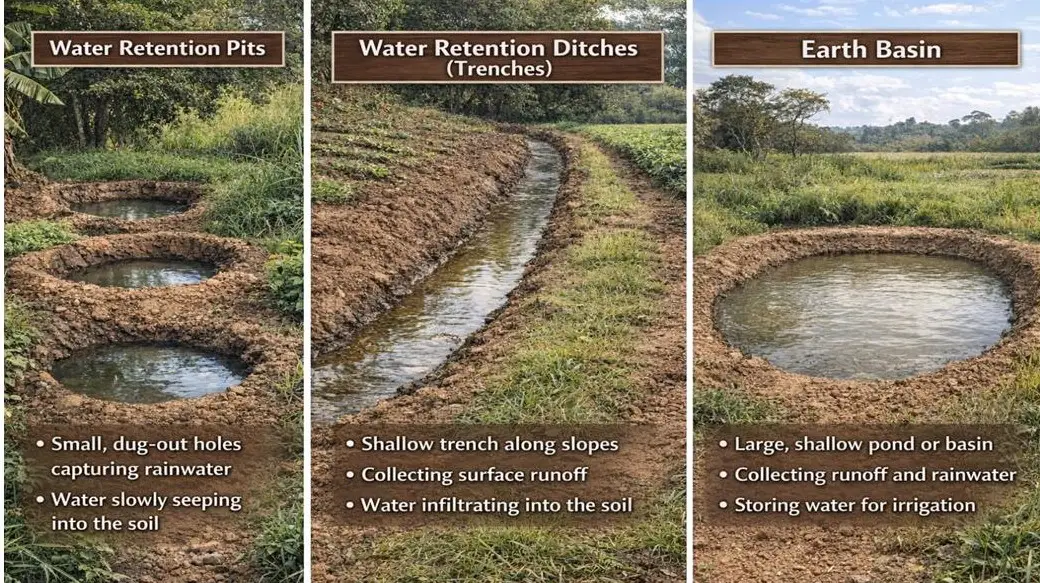
Figure: Water retention structures used in soil and water conservation.
Did you know?
Water retention structures such as pits and trenches help capture rainwater and allow it to slowly
soak into the soil, helping crops survive during dry periods.
Water Retention Ditch Details
Definition: A shallow trench dug into the ground along the slope or field edge.
Purpose: Collects and holds surface run-off water.
Benefit: Water soaks slowly into the soil, increasing moisture for crops and reducing erosion.
Importance of Water Retention Structures
- Conserves Surface Run-off Water: Ensures water is available during dry periods.
- Prevents Soil Erosion: Slows down water flow, reducing soil loss from slopes or fields.
- Keeps Soil Moist: Moist soil supports better crop growth and reduces drought stress.
- Supports Plant Growth: Provides crops with a continuous water supply.
Planting Crops Using Retained Water:
Steps:
- Discuss and select suitable crops for your farm and climate.
- Dig evenly spaced holes along the edge of the water retention structure.
- Mix manure with the soil in each hole to improve fertility.
- Place seeds, seedlings, or cuttings in the holes and cover with soil.
- Cover the soil around plants with mulch to reduce evaporation and conserve moisture.
- Water, weed, and care for crops until they mature.
Importance of Planting Crops Near Water Retention Structures:
- Crops can access stored water during dry periods.
- Mulch and retained water help prevent soil erosion.
- Soil moisture is improved, supporting healthy plant growth.
Factors to Consider When Constructing
-
Slope of Land:
- Steeper slopes require stronger or larger structures to withstand fast water flow.
-
Soil Conditions:
- Sandy soils drain quickly and may need deeper pits or ditches.
- Heavy clay soils may require wider structures to hold more water.
-
Space Available:
- The shape and size of the land determine the most suitable type of retention structure.
Summary
Water Retention Structures
- Water retention structures collect and hold surface run-off water.
- They allow water to soak slowly into the soil.
- This helps conserve water, maintain soil moisture, and support plant growth.
Examples of Structures
- Water retention pits capture rainwater and allow it to seep into the soil.
- Water retention ditches collect and hold water along slopes or farmland.
- Earth basins store rainwater for later use such as irrigation.
Water Retention Ditches
- They are shallow trenches dug along slopes or field edges.
- They collect surface run-off water from rainfall or irrigation.
- Water slowly infiltrates the soil, improving moisture and reducing erosion.
Importance of Structures
- Conserve surface run-off water for use during dry periods.
- Prevent soil erosion by slowing water flow.
- Maintain soil moisture for healthy crop growth.
- Support continuous plant water supply.
Construction Factors
- Slope of land determines the strength and size of structures needed.
- Sandy soils may need deeper structures due to fast drainage.
- Clay soils may require wider structures to hold more water.
- Available space influences the type and size of structures.
Planting Using Retained Water
- Suitable crops should be selected based on climate and farm conditions.
- Seeds or seedlings are planted along retention structures.
- Manure improves soil fertility and crop growth.
- Mulching helps conserve moisture and reduce evaporation.
Crop Management
- Crops should be watered, weeded, and properly maintained.
- Retention structures provide steady moisture supply.
- This supports healthy growth until crops mature.
Benefits of Planting Near Structures
- Crops access stored water during dry periods.
- Mulch and water reduce soil erosion.
- Improved soil moisture supports strong plant growth.
Assessment
Water Retention Structures Assessment
Answer all 10 questions about water retention structures, their importance, construction factors, and crop use. Your results will be marked automatically.
10 Questions
Certificate of Achievement
This certifies that
has successfully completed the assessment on
Water Retention Structures
Score:
Jump to Grade 7 Agriculture Topics
Select another topic below:
Controlling Soil Pollution
Water Retention Structures
Conserving Food Nutrients
Growing Trees
Crop Establishment
Crop Management Practices
Preparing Animal Products
Cooking Food
Animal Hygiene Practices
Laundry (Loose-Coloured Items)
Knitting Skills
Framed Suspended Gardens
Adding Value to Crop Produce
Making Homemade Soap