Crop Establishment: Meaning, Tilth Types and Planting Materials Guide
Learn about food production processes, crop establishment, the meaning of tilth,
types of tilth, suitable planting materials, and the main factors that support
healthy germination and strong crop growth.
Those tiny 💡 bulbs are not just sitting there looking cute 😏
Tap them… they’re hiding smart facts 🧠✨
Food Production Processes
Food production processes include all the activities carried out to produce food from crops and animals.
These activities start from preparing the land and planting, all the way to harvesting, processing,
and preparing food for consumption or sale.
Food production is important because it ensures:
- Food security – people have enough food to eat
- Good nutrition – food provides essential nutrients for the body
- Income generation – farmers earn money from selling produce
- Safe and healthy food – proper production reduces contamination
👉 In simple terms, food production supports both life and livelihoods.
2.1 Crop Establishment
Crop establishment is the process of planting crops and ensuring they germinate successfully,
grow properly, and develop into strong, healthy plants.
It is one of the most important stages in farming because it determines how well the crop will
perform later.
💡
Did you know?Even when farmers use good fertilizer later, poor crop establishment at the beginning can still reduce final yield.
It involves:
- Proper land preparation
- Selecting suitable planting materials
- Preparing the right soil condition (tilth)
- Providing early care after planting
Importance of Proper Crop Establishment
Proper crop establishment is very important because it determines:
- The strength of seedlings
- Uniform plant population
- Resistance to pests and diseases
- Final crop yield and quality
👉 If crops are poorly established, even good management later may not produce high yields.
2.1.1 Determining Appropriate Tilth for Planting Materials
Meaning of Tilth
Tilth refers to the physical condition of the soil after preparation. It describes how fine or coarse
the soil is, how loose or compact it is, and how well it can support plant growth.
Simply put, tilth is how suitable the soil is for planting.
Good Tilth
Good tilth:
- Allows easy root penetration
- Improves water infiltration
- Enhances air circulation in the soil
- Promotes quick and uniform germination
- Supports strong plant anchorage
👉 Good tilth creates the right environment for seeds and planting materials to grow well.
Poor Tilth
Poor tilth may:
- Delay germination
- Cause poor root development
- Lead to waterlogging or poor drainage
💡
Did you know?Seeds need both moisture and air in the soil. Soil that is too compact can block root growth and reduce germination.
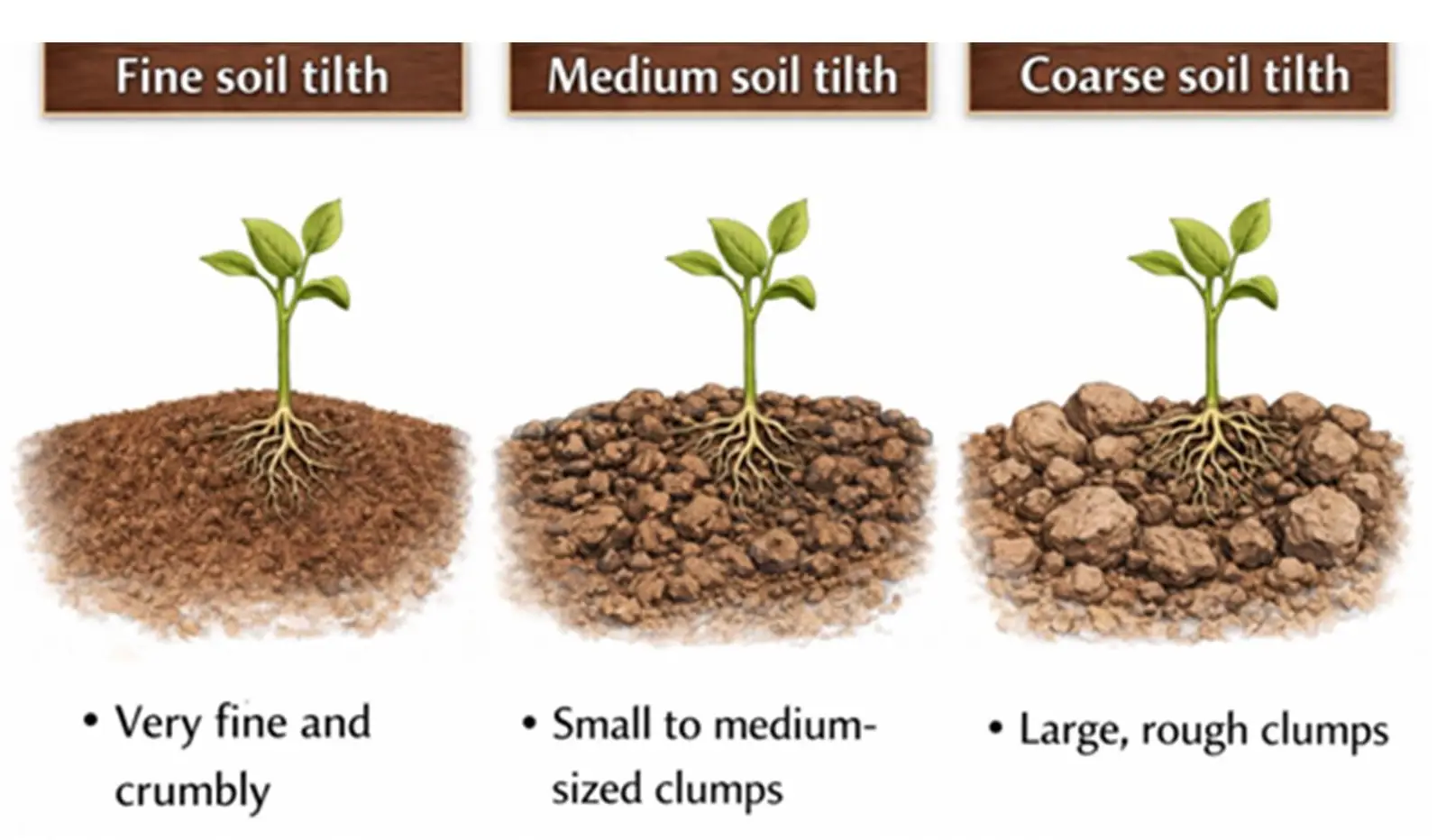
Types of Tilth
1. Fine Tilth
- Soil is smooth and finely broken into small particles.
- No large soil clods remain.
- Suitable for small-sized seeds.
Why Fine Tilth is Important
- Small seeds are delicate and cannot push through large soil lumps.
- Ensures even seed depth.
- Promotes quick and uniform germination.
👉 Fine tilth is best for small seeds because it gives them soft soil for easy germination.
2. Medium Tilth
- Soil is moderately broken.
- Has medium-sized soil particles.
- Suitable for medium-sized seeds.
Why Medium Tilth is Important
- Allows good root penetration.
- Provides enough support for growing seedlings.
- Prevents excessive soil compaction.
👉 Medium tilth gives a good balance between support and easy growth.
3. Coarse Tilth
- Soil contains larger clods.
- Less finely broken compared to fine tilth.
- Suitable for large planting materials.
Why Coarse Tilth is Important
- Large planting materials are strong and can grow through bigger soil particles.
- Provides firm anchorage.
- Prevents rotting by allowing proper drainage.
👉 Coarse tilth suits bulky planting materials because it prevents waterlogging and supports strong anchorage.
💡
Did you know?Using the wrong tilth for a planting material can slow emergence and make crop establishment uneven.
Preparing Suitable Tilth for Different Planting Materials
A. Small-Sized Seeds (Fine Tilth)
Examples: Sukuma wiki, carrots, onions
Small seeds require special care because they are light and delicate. They need fine tilth so that they
can germinate easily and come out of the soil without difficulty.
Steps
- Select and Dig the Site – Choose fertile, well-drained soil and dig deeply to loosen it.
- Break Soil Lumps into Fine Particles – Use a rake or jembe and ensure the soil is soft and smooth.
- Level the Soil – This creates uniform planting depth and prevents water stagnation.
- Remove Stones, Sticks, and Debris – This prevents obstruction of seed germination.
- Make Shallow Lines or Holes – Small seeds should not be planted too deep.
- Sow Seeds Evenly – Avoid overcrowding.
- Cover Lightly with Soil – Too much soil may prevent germination.
- Water if Soil is Dry – This provides moisture for germination.
- Cover with Mulch – Conserves moisture and protects seeds from heavy rain. Remove mulch after germination.
- Continue Crop Care Until Maturity – Thin if overcrowded, weed regularly, and protect from pests.
👉 Fine tilth helps small seeds germinate quickly and evenly.
💡
Did you know?Small seeds can fail to emerge if they are planted too deep or covered with too much soil.
B. Medium-Sized Seeds (Medium Tilth)
Examples: Maize, beans
These seeds are stronger than small seeds and require moderate soil preparation. Medium tilth gives
enough looseness for germination and enough firmness for support.
Steps
- Identify Suitable Site – Ensure adequate sunlight and proper drainage.
- Clear Vegetation – Remove weeds and bushes.
- Dig and Break Soil to Medium Texture – Do not over-pulverize soil.
- Make Spaced Planting Holes – Follow recommended spacing.
- Add Manure – Mix manure with soil to improve fertility.
- Sow Seeds – Place seeds at correct depth.
- Cover with Soil – Press gently to ensure contact with soil.
- Water if Necessary – Especially during dry conditions.
- Care for Crops Until Maturity – Weed, thin, and apply fertilizer if needed.
👉 Medium tilth gives medium-sized seeds a good balance of support and root growth.
C. Large Planting Materials (Coarse Tilth)
Examples: Cassava cuttings, sweet potatoes
These planting materials are bulky and require deeper planting. Coarse tilth is suitable because it gives
enough space, support, and drainage for healthy establishment.
Steps
- Identify Site – Choose fertile and well-drained land.
- Clear Vegetation – Remove weeds and plant residues.
- Dig and Break Soil to Coarse Texture – Soil should not be too fine.
- Make Spaced Holes or Ridges – Ensure enough space for growth.
- Add Manure – Improves soil nutrients.
- Plant Large Materials Firmly – Ensure good soil contact and position correctly, especially cuttings.
- Water if Soil is Dry – Helps establishment.
- Apply Mulch at the Base – Conserves moisture and suppresses weeds.
- Continue Care Until Maturity – Weed regularly, protect from pests and diseases, and support plants if necessary.
👉 Coarse tilth helps large planting materials establish well without rotting.
💡
Did you know?Good drainage is especially important for cuttings and bulky planting materials because too much water can cause rotting.
2.2 Factors to Consider During Crop Establishment
Successful crop establishment depends on several important factors. Farmers need to think about these
conditions before and during planting.
- Type and size of planting material – This determines the kind of tilth needed.
- Soil type and fertility – Fertile soil supports healthy crop growth.
- Rainfall availability – Moisture is necessary for germination and establishment.
- Proper spacing – Good spacing prevents overcrowding and competition.
- Time of planting – Planting is usually best done at the onset of rains.
👉 Considering these factors helps farmers achieve better germination, strong seedlings, and higher yields.
💡
Did you know?Planting at the right time, especially when rains begin, can greatly improve crop establishment and reduce seed loss.
Summary
Food Production Processes
- Include all activities from planting to preparing food.
- Ensure food security and good nutrition.
- Provide income and safe food for people.
Crop Establishment
- Involves planting crops and ensuring successful germination.
- Includes land preparation, planting, and early care.
- Determines future crop growth and productivity.
Importance of Crop Establishment
- Determines strength of seedlings.
- Ensures uniform plant population.
- Improves resistance to pests and diseases.
- Affects final yield and crop quality.
Tilth
- Refers to the physical condition of the soil after preparation.
- Good tilth supports root growth and germination.
- Poor tilth leads to weak plants and poor yield.
Types of Tilth
- Fine tilth – suitable for small seeds.
- Medium tilth – suitable for medium-sized seeds.
- Coarse tilth – suitable for large planting materials.
Small-Sized Seeds
- Require fine tilth for easy germination.
- Should be planted shallowly.
- Need careful watering and protection.
Medium-Sized Seeds
- Require medium tilth.
- Need proper spacing and moderate soil preparation.
- Grow well with balanced soil conditions.
Large Planting Materials
- Require coarse tilth and deeper planting.
- Need good drainage to prevent rotting.
- Provide strong anchorage in soil.
Crop Establishment Practices
- Include mulching, watering, and weed control.
- Ensure healthy early crop growth.
- Improve survival and development.
Factors to Consider
- Type and size of planting material.
- Soil type and fertility.
- Rainfall availability.
- Proper spacing and planting time.
Assessment
Crop Establishment Assessment
Answer all 15 questions on crop establishment, tilth, and planting materials. Your results will be marked automatically.
15 Questions
Certificate of Achievement
This certifies that
has successfully completed the assessment on
Crop Establishment
Score:
Jump to Grade 7 Agriculture Topics
Select another topic below:
Controlling Soil Pollution
Water Retention Structures
Conserving Food Nutrients
Growing Trees
Crop Establishment
Crop Management Practices
Preparing Animal Products
Cooking Food
Animal Hygiene Practices
Laundry (Loose-Coloured Items)
Knitting Skills
Framed Suspended Gardens
Adding Value to Crop Produce
Making Homemade Soap